
Bonus Part 5: Cortisol, Stress, and Electrolytes: How the Stress Response Can Affect Blood Pressure and Body Signals
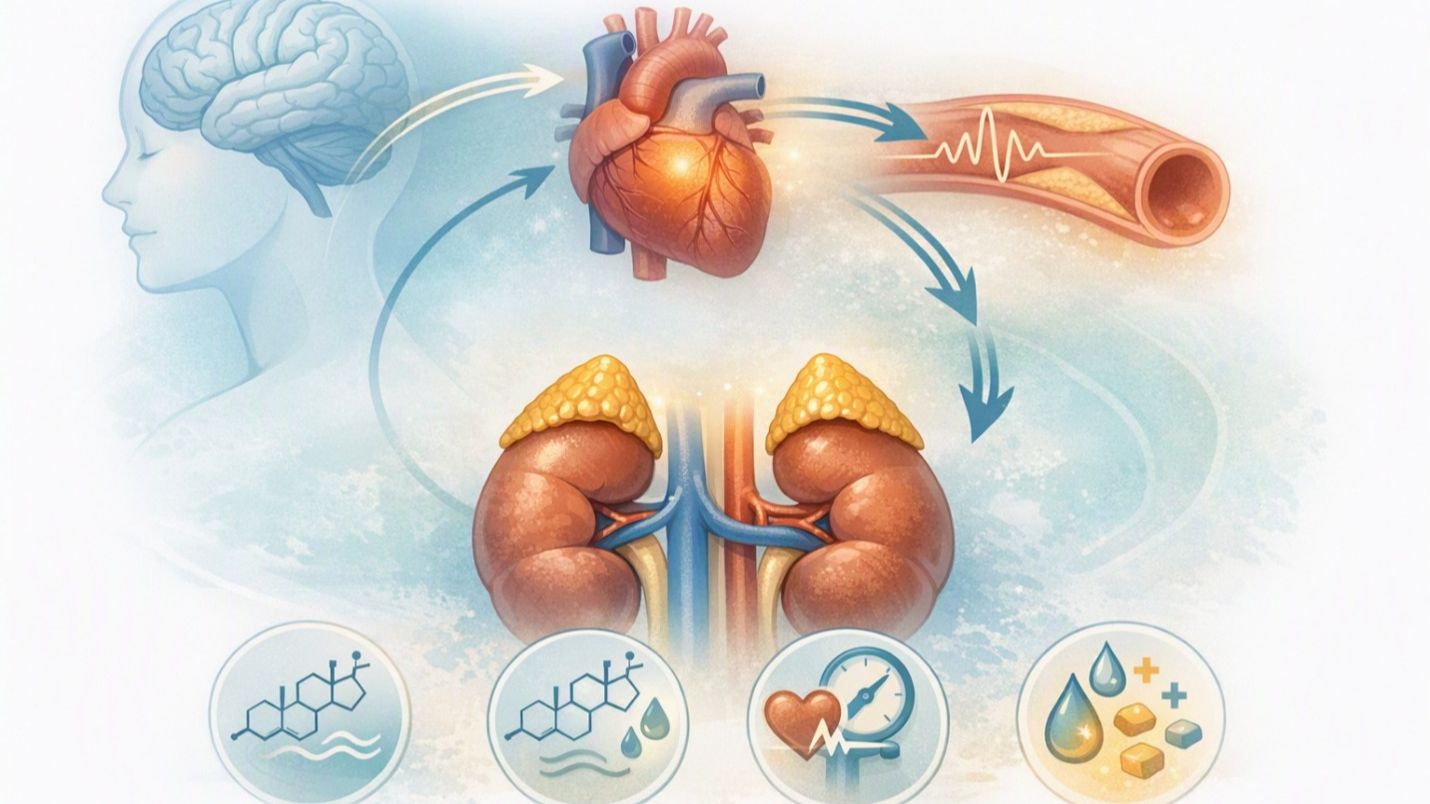
Cortisol is often called the body’s stress hormone, but it is more than a stress signal. It helps regulate metabolism, inflammation, blood sugar, sleep-wake rhythm, blood pressure, and how the body responds to physical or emotional strain. In a series about potassium, medications, diet, and body signals, cortisol adds an important upstream layer: the stress-response system that can influence how symptoms show up and how the body manages pressure, fluid, and energy demands.
Where Cortisol Fits Into the Potassium Story
Cortisol is not usually the main hormone that directly controls potassium. That job belongs more to aldosterone, another adrenal hormone that helps the kidneys retain sodium and water while excreting potassium. But cortisol and aldosterone come from the adrenal system, and both are connected to blood pressure, stress physiology, kidney signaling, and fluid balance. That is why cortisol research can help explain the larger environment around electrolyte symptoms.
Stress Can Change the Signal, Not Just the Number
When cortisol rises during stress, illness, poor sleep, pain, or inflammation, the body may become more alert and reactive. Blood pressure may rise, heart rate may feel more noticeable, muscles may tense, digestion may slow or feel unsettled, and symptoms such as shakiness, dizziness, nausea, palpitations, or sleep disruption may become more noticeable. These symptoms can overlap with electrolyte imbalance, which is why tracking patterns matters.
Cortisol, Aldosterone, and Blood Pressure
The adrenal glands produce several hormones involved in blood pressure and stress response. Cortisol can support blood pressure regulation and make blood vessels more responsive to signals that tighten them. Aldosterone more directly affects sodium, water, and potassium balance through the kidneys. Together, these systems help explain why stress, medication changes, kidney function, hydration, and electrolytes can feel interconnected.
What Cortisol Research Adds to the Series
- Part 1 connection: Potassium affects electrical signaling; cortisol can amplify the body’s stress response and make those signals feel more intense.
- Part 2 connection: Blood pressure medications work inside systems that overlap with kidney, adrenal, and vascular regulation.
- Part 3 connection: Stress can influence eating patterns, hydration, caffeine use, sleep, and supplement choices that may affect electrolytes.
- Part 4 connection: Cortisol-related stress symptoms can resemble electrolyte symptoms, so tracking timing, vitals, medication use, sleep, and lab results can help clinicians sort out the cause.
A Practical Tracking Framework
- Track sleep quality and wake time.
- Note stress level, illness, pain, caffeine, alcohol, and intense exercise.
- Record medication timing and any dose changes.
- Measure blood pressure and heart rate when symptoms occur, if available.
- Write down hydration, salt substitute use, electrolyte drinks, supplements, and high-potassium meals.
- Bring recent potassium, sodium, kidney function, and adrenal-related lab questions to a healthcare professional.
Medical note: Cortisol, aldosterone, potassium, blood pressure, and medication effects are complex. Symptoms alone cannot diagnose a hormone or electrolyte problem. Seek medical care for chest pain, fainting, severe weakness, shortness of breath, confusion, or sustained heart palpitations.
Manage your Injury Recovery safely.
Learn how to balance nutrition, muscle, and cardio training after an Injury or Heart Event without causing dangerous tissue acidosis.
Download The Safe Return Guide Below
Connect with The Peak Community
sign up for your free copy of
The Peak Report
Get the latest actionable tips & insights
Don't worry, your information will not be shared.
We hate SPAM. We will never sell your information, for any reason.