
Part 4: Dizziness, Cramps, and Heart Flutters: When Electrolyte Symptoms Need Attention
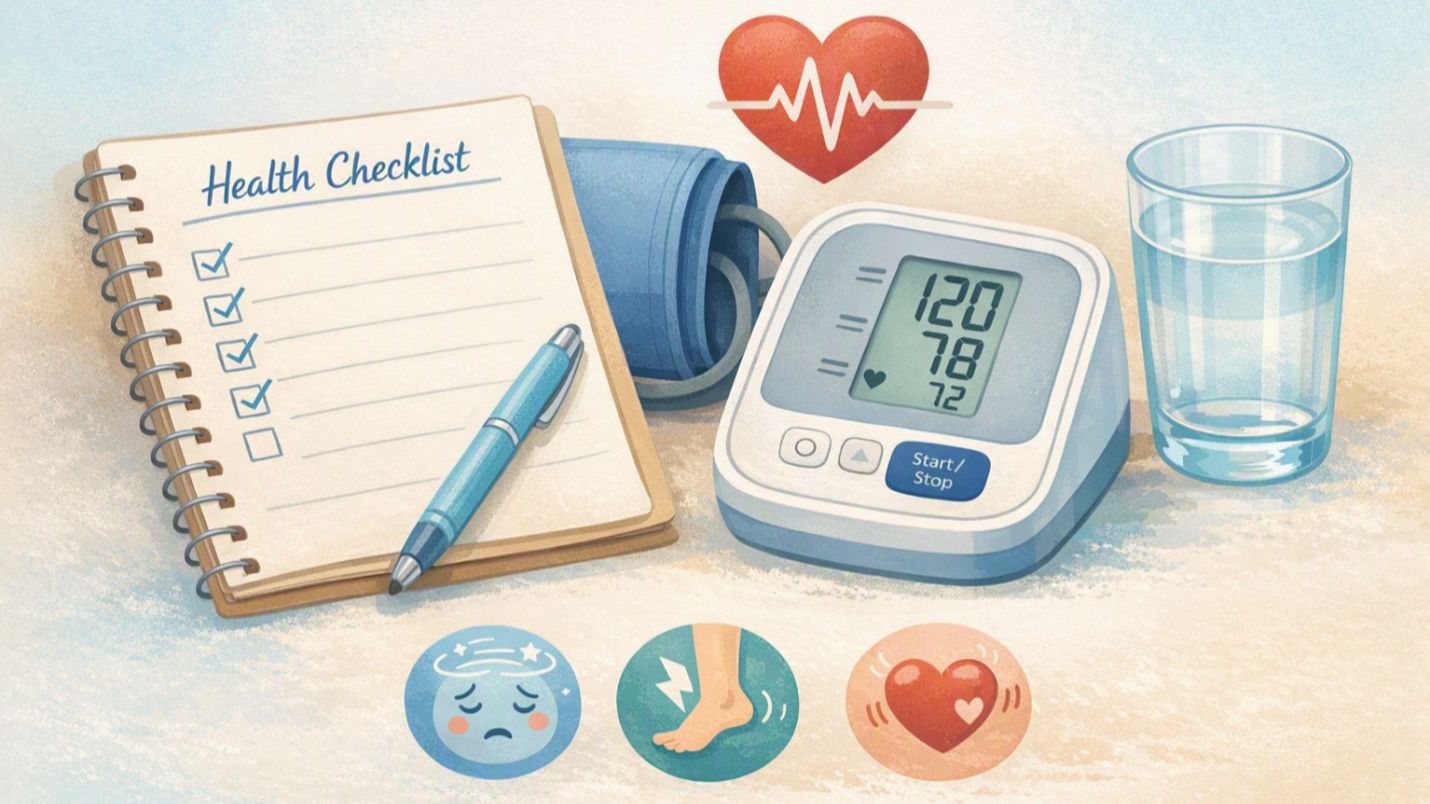
Dizziness, cramps, nausea, weakness, tingling, and heart flutters can have many causes. Sometimes they are related to hydration, blood pressure, blood sugar, medication timing, anxiety, illness, or electrolyte imbalance. Because symptoms overlap, the safest approach is to track patterns and know which warning signs need prompt medical care.
Common Symptoms to Track
- Dizziness or lightheadedness
- Nausea, vomiting, bloating, or constipation
- Muscle cramps, twitching, heaviness, or weakness
- Numbness, tingling, or pins-and-needles sensations
- Heart flutters, pounding, skipped beats, or racing heartbeat
- Shortness of breath, chest pressure, or fainting
When Symptoms May Be Medication-Related
If symptoms happen at a predictable time after taking medication, write that down. Note the medication name, dose, time taken, whether it was taken with food, and what your blood pressure and heart rate were before and after. This information can help your clinician determine whether the issue may be blood pressure, heart rate, hydration, electrolyte balance, or another factor.
Red Flags: Seek Urgent Medical Care
Seek urgent care or emergency help if you have chest pain, fainting, severe shortness of breath, severe or sudden weakness, confusion, a sustained racing heartbeat, a very slow heartbeat with symptoms, or palpitations with dizziness or chest discomfort. Sudden or severe potassium imbalance can affect the heart and may require immediate treatment.
A Simple Tracking Checklist
- Date and time symptoms started
- Blood pressure and heart rate, if available
- Medication names, doses, and timing
- Food, salt substitute, electrolyte drink, or supplement use that day
- Recent vomiting, diarrhea, sweating, dehydration, or illness
- Recent lab results, especially potassium and kidney function
- What improved or worsened the symptoms
What to Ask at Your Next Appointment
- Could my symptoms be related to potassium, sodium, magnesium, blood pressure, or heart rate?
- Do I need a basic metabolic panel or kidney function test?
- Should I adjust diet, salt substitutes, electrolyte drinks, or supplements?
- Are any of my medications interacting or overlapping in effect?
- What symptom pattern should make me call you the same day?
Medical note: Symptoms alone cannot diagnose high or low potassium. Lab testing and clinical evaluation are needed. If symptoms feel severe, sudden, or heart-related, seek urgent care.
Manage your Injury Recovery safely.
Learn how to balance nutrition, muscle, and cardio training after an Injury or Heart Event without causing dangerous tissue acidosis.
Download The Safe Return Guide Below
Connect with The Peak Community
sign up for your free copy of
The Peak Report
Get the latest actionable tips & insights
Don't worry, your information will not be shared.
We hate SPAM. We will never sell your information, for any reason.