
Part 3: Hidden Potassium in Everyday Foods: Salt Substitutes, Smoothies, and Electrolyte Drinks
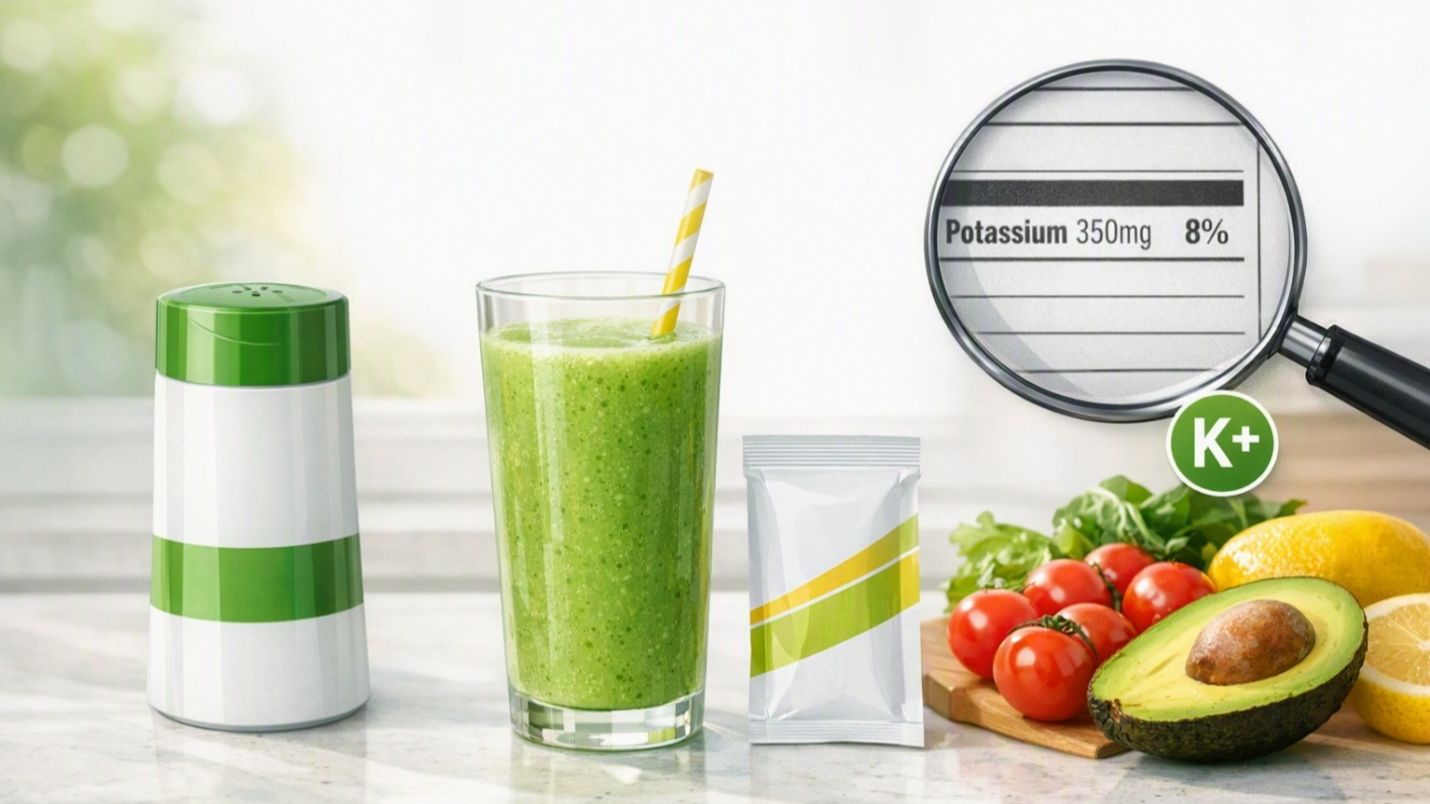
Potassium is found in many healthy foods, and for many people that is a good thing. But if your clinician has told you to watch potassium, the challenge is that potassium can hide in places you might not expect: salt substitutes, low-sodium foods, smoothies, electrolyte drinks, supplements, and large portions of otherwise nutritious foods.
The Salt Substitute Surprise
Many salt substitutes replace sodium chloride with potassium chloride. That can be helpful for some people trying to reduce sodium, but it can be risky for people who need to limit potassium or who take medications that raise potassium. If a label says “potassium chloride,” “no salt,” “lite salt,” or “low sodium,” it is worth pausing and asking whether it fits your care plan.
High-Potassium Foods Are Not “Bad” Foods
Bananas, oranges, potatoes, tomatoes, spinach, beans, avocados, and many other potassium-rich foods can be part of a healthy diet for many people. The key is individualization. If your potassium is high, your healthcare professional or dietitian may suggest portion changes, swaps, or temporary limits. If your potassium is low, they may recommend the opposite. The right target depends on your lab results, kidney function, medications, and overall health.
Smoothies and “Healthy” Drinks Can Add Up Fast
A smoothie can combine several high-potassium ingredients in one glass: banana, spinach, avocado, yogurt, orange juice, protein powder, and electrolyte powder. Each ingredient may seem harmless alone, but together they can create a high-potassium drink. The same is true for some sports drinks, hydration powders, and wellness supplements.
Label-Reading Tips
- Look for “potassium” on the nutrition label.
- Scan ingredients for potassium chloride, potassium citrate, potassium phosphate, and potassium bicarbonate.
- Be cautious with “low sodium” claims if potassium chloride is used as a substitute.
- Check serving size; a large portion of a moderate-potassium food can become a high-potassium meal.
- Ask your clinician whether you need a potassium limit or simply general awareness.
Simple Swaps to Discuss With a Dietitian
If you have been told to lower potassium, a dietitian may suggest swaps such as apples, berries, grapes, cucumbers, lettuce, rice, pasta, or other lower-potassium choices, depending on your needs. The goal is not to make food stressful. The goal is to make potassium visible so you can make informed choices.
Medical note: Potassium needs vary widely. Do not start a low-potassium diet or potassium supplement without medical guidance, especially if you have kidney disease, heart failure, diabetes, or take blood pressure medications.
Manage your Injury Recovery safely.
Learn how to balance nutrition, muscle, and cardio training after an Injury or Heart Event without causing dangerous tissue acidosis.
Download The Safe Return Guide Below
Connect with The Peak Community
sign up for your free copy of
The Peak Report
Get the latest actionable tips & insights
Don't worry, your information will not be shared.
We hate SPAM. We will never sell your information, for any reason.