
Part 1: The Electrical Spike: Why Rapid Potassium Swings Dangerously Short-Circuit Your Body
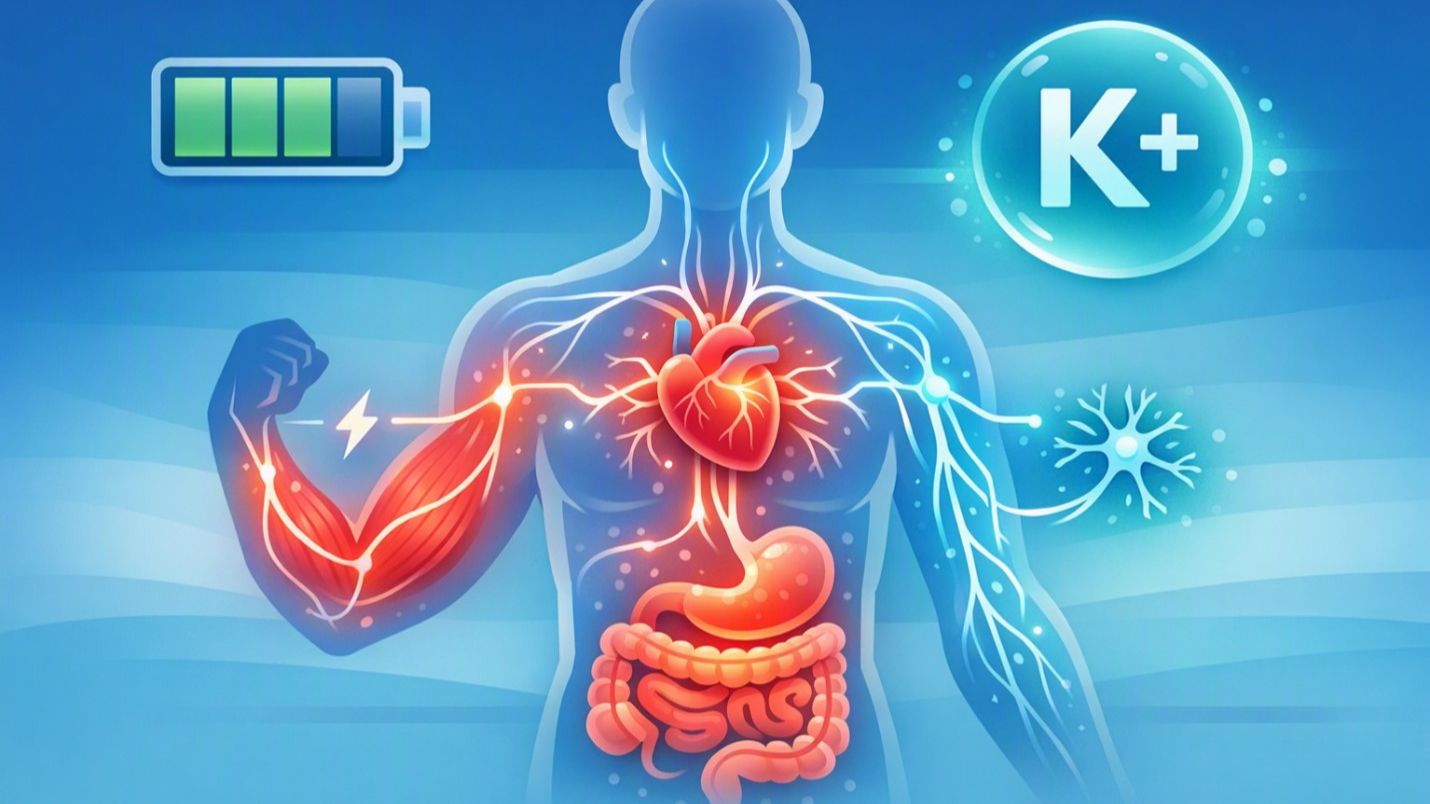
Potassium is more than a nutrient on a nutrition label. It is one of the minerals your body uses to conduct electricity, helping your heartbeat regularly, your muscles contract, your nerves send signals, and your blood pressure stay better regulated. When potassium levels move too high or too low, the body’s electrical system can feel unstable.
Think of potassium as part of your body’s internal battery. Most potassium lives inside your cells, while a much smaller amount circulates in your blood. That difference creates an electrical gradient your body depends on. When potassium balance shifts quickly, especially in people with kidney concerns, medication changes, dehydration, or major diet changes, symptoms can show up in the heart, muscles, nerves, stomach, and blood pressure.
What Happens When Potassium Goes Too High?
High potassium is called hyperkalemia. It may cause few or vague symptoms at first, which is why lab testing matters. When symptoms do appear, they may include muscle weakness, numbness, tingling, nausea, vomiting, shortness of breath, chest pain, or heart palpitations. Sudden or severe hyperkalemia can be dangerous because potassium directly affects the heart’s electrical rhythm.
What Happens When Potassium Drops Too Low?
Low potassium is called hypokalemia. It can happen with vomiting, diarrhea, certain diuretics, heavy sweating, or other medical conditions. Low potassium can cause muscle cramps, weakness, fatigue, constipation, abnormal heart rhythms, or a feeling that the body cannot “fire” normally. Just like high potassium, low potassium can become serious when it affects the heart.
Why the Heart Reacts First
The heart is an electrical organ. Every heartbeat depends on carefully timed signals, and potassium helps reset those signals between beats. Too much potassium can slow or disrupt the rhythm. Too little potassium can make the heart more irritable and prone to flutters or skipped beats. This is why potassium imbalance symptoms should never be brushed off when they involve chest pain, fainting, shortness of breath, or palpitations.
Muscles, Nerves, and Digestion Can Feel the Shift
Because potassium helps muscles and nerves communicate, an imbalance can show up as cramps, twitching, heaviness, weakness, numbness, tingling, or odd sensations around the hands, feet, mouth, or lips. The digestive tract also uses smooth muscle to move food along, so potassium imbalance can contribute to nausea, bloating, vomiting, or constipation.
What Helps Keep Potassium Stable?
- Know whether your medications can raise or lower potassium.
- Ask your healthcare professional how often you need blood work.
- Read labels on salt substitutes and electrolyte powders.
- Do not start potassium supplements unless your clinician recommends them.
- Track symptoms alongside blood pressure, heart rate, medication timing, and recent diet changes.
Medical note: This article is for general education only and is not a substitute for medical advice. Severe potassium imbalance can be life-threatening. Seek urgent care for chest pain, fainting, severe weakness, shortness of breath, or a racing, pounding, or irregular heartbeat.
Manage your Injury Recovery safely.
Learn how to balance nutrition, muscle, and cardio training after an Injury or Heart Event without causing dangerous tissue acidosis.
Download The Safe Return Guide Below
Connect with The Peak Community
sign up for your free copy of
The Peak Report
Get the latest actionable tips & insights
Don't worry, your information will not be shared.
We hate SPAM. We will never sell your information, for any reason.